


Hydration and blood sugar can influence each other
Did lunch cause that higher reading, or was the hot afternoon part of the equation?
While food is usually the first suspect, fluid balance can be part of the picture too.
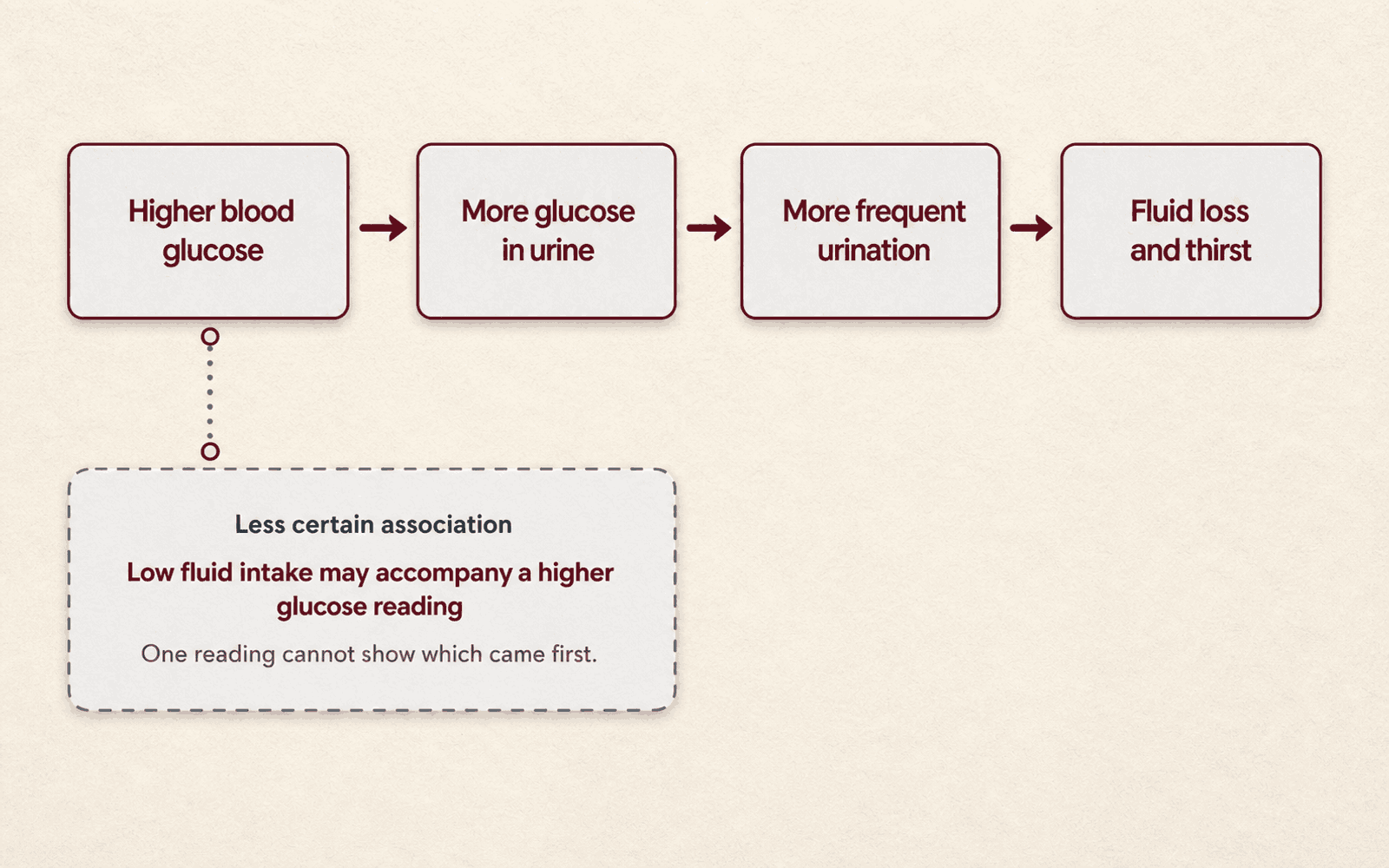
When blood sugar runs high, the kidneys move more glucose into urine. Water follows, so you may urinate more often, feel thirstier, and become dehydrated. Going too long without enough fluid can also accompany a higher glucose reading.
The CDC describes this as a two-way relationship: too little fluid can raise blood sugar, and high blood sugar can increase urination and fluid loss. Heat makes the loop easier to enter, especially for people whose diabetes has affected sweating or circulation.
A glucose meter cannot show which direction the loop started. One reading also cannot separate hydration from meals, medication, activity, sleep, stress, or illness. Look for patterns and respond to the whole situation.
What researchers are still working out
When the body needs to conserve water, it releases a hormone called vasopressin. Researchers often measure copeptin, a more stable marker that rises alongside vasopressin. Higher copeptin levels have been associated with a greater risk of developing type 2 diabetes in long-running population studies.
That association raised an appealing question: could drinking more water improve glucose regulation?
The answer remains unsettled. In the H2O Metabolism pilot study, 31 adults with high copeptin and concentrated urine added 1.5 liters of water each day for six weeks. Copeptin fell, and fasting glucose decreased by a small amount. The study had no control group, selected a narrow group of participants, lasted only six weeks, and received industry co-funding. Those limits make it impossible to credit the glucose change to water alone.
Other small experiments have produced mixed results. One randomized crossover study created mild hypohydration in 16 healthy adults and found no meaningful change in fasting glucose, insulin, or oral glucose tolerance. A larger year-long water-supplementation trial enrolled 797 participants and finished in 2025, but its registry had no results posted as of 2026-07-30.
While staying hydrated is essential to general diabetes care, current evidence doesn’t support using extra water as a treatment to lower blood sugar.
Start with a reference point
How much fluid should you drink? A universal number sounds convenient, yet it leaves out the water in food, differences between bodies, local weather, activity, and medical conditions.
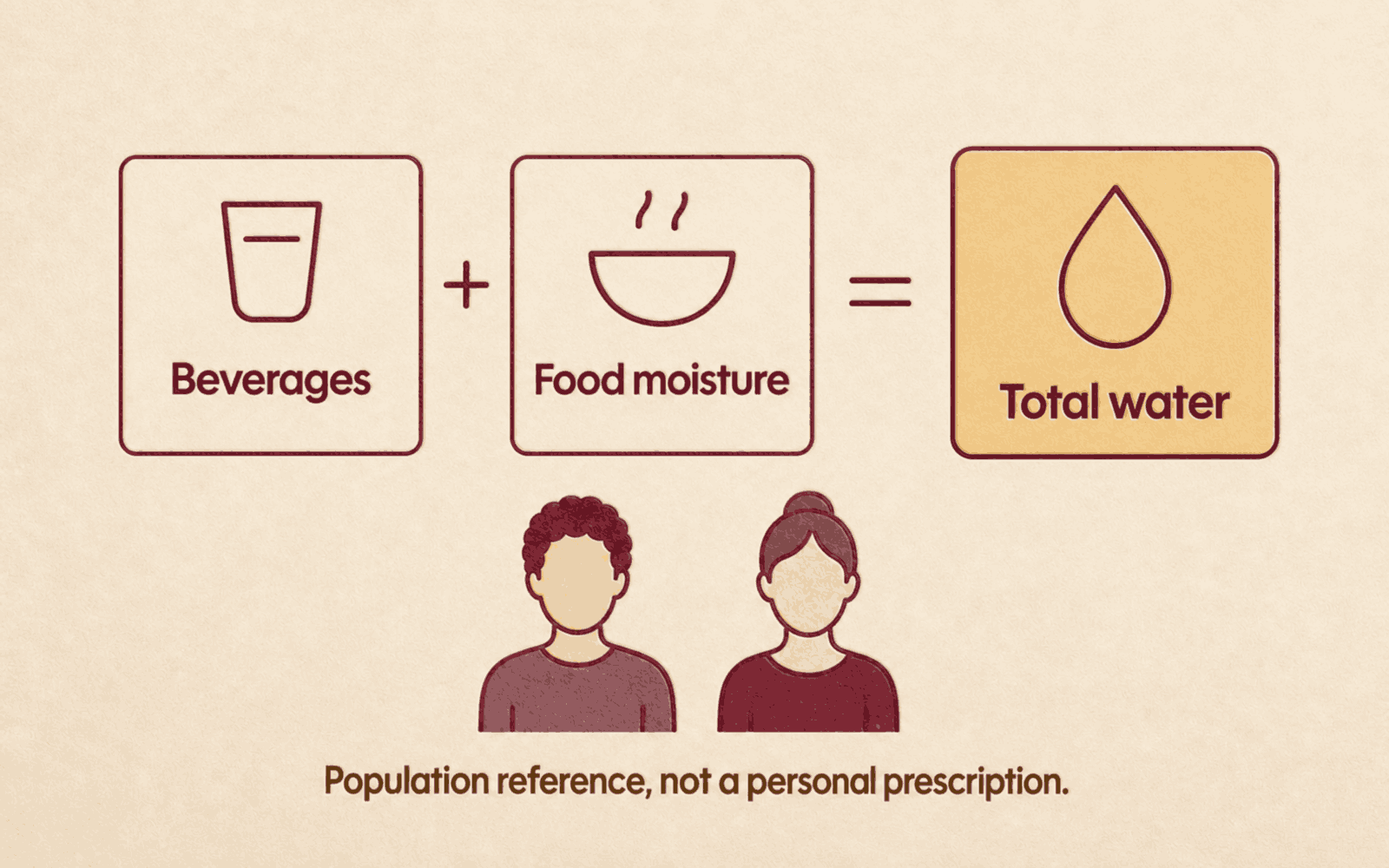
The National Academies set Adequate Intake reference values for total water at about 2.7 liters (91 ounces) per day for adult women and 3.7 liters (125 ounces) for adult men. Total water includes plain water, other beverages, and the moisture in food. About 20 percent came from food in the population data used for the report.
These figures describe healthy, generally sedentary adults living in a temperate climate. They are population reference values, and the Academies notes that day-to-day thirst and beverages with meals usually maintain hydration for healthy people. Read the numbers as orientation for a conversation with your care team, especially if your usual intake falls far below them. The full National Academies guidance explains how the values were developed.
Your needs change with the day
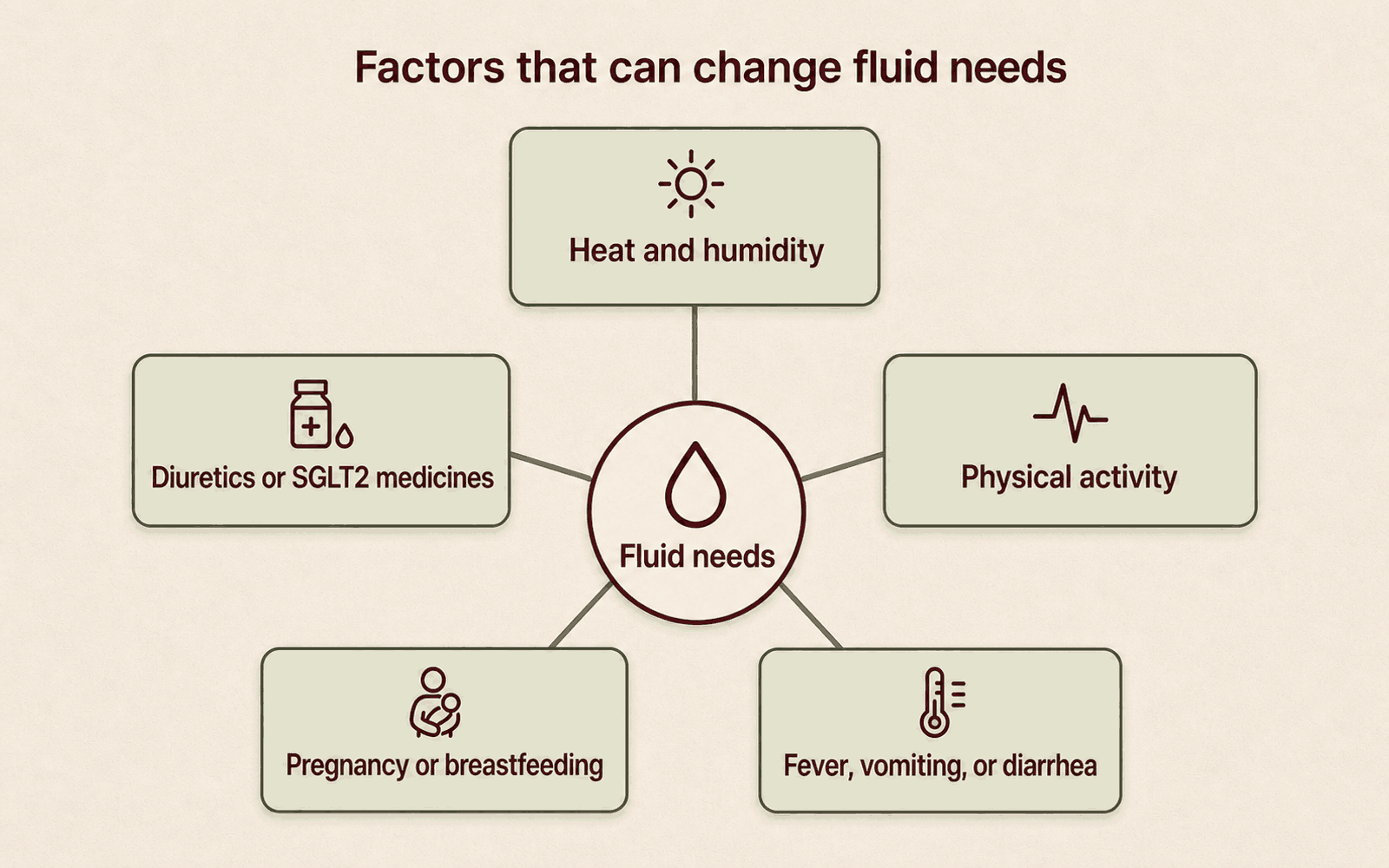
A cool day at a desk and an afternoon working outside place different demands on the same body. Fluid needs can rise with heat, humidity, physical activity, fever, vomiting, diarrhea, pregnancy, or breastfeeding. High blood sugar can raise the need to replace fluid because of more frequent urination.
Some medicines matter too. Diuretics increase urine output. SGLT2 medicines move glucose into the urine and can add to fluid loss, particularly during illness, fasting, or heat. The current FDA prescribing information for Jardiance describes this volume-depletion risk. Ask your prescriber what changes should trigger a call and whether you have a sick-day plan.
Urine color can provide a rough clue. NIDDK describes pale yellow urine as a practical guide. Vitamins, medicines, foods, and some health conditions can change the color, so use it alongside thirst, weather, activity, and your clinical plan.
Water is an easy default. Unsweetened sparkling water, tea, coffee, milk, and other beverages can contribute fluid too. Their other ingredients still count: a sweetened drink may add enough carbohydrate to affect blood sugar, and caffeine or alcohol may deserve separate guidance for some people. Juice or regular soda can still have a specific job when your care plan calls for fast carbohydrate to treat low blood sugar.
Build a routine that can flex
Where does your day routinely go dry?
Staying hydrated is largely about setting yourself up for success. If you leave the house or head into a busy workday unprepared, it’s easy to get into hydration trouble. Before buying a larger bottle or setting hourly alarms, observe three ordinary days to see where the gaps occur. Notice what you drink, the longest gaps, when thirst appears, and whether heat, activity, or higher glucose changes the pattern. You are looking for one useful opening. A perfect fluid log adds little.
Then try a small adjustment:
- Put a drink where the long gap happens, such as your desk, car, or kitchen.
- Pair a few sips with an existing cue, such as breakfast, medication, or a work break.
- Choose an unsweetened option you enjoy enough to keep nearby.
- Review the pattern after a week. Persistent thirst, frequent urination, or repeated high glucose readings deserve a conversation with your care team.
Use a bottle as a visibility cue. Let the day and your clinical plan determine the amount. If work rules, bathroom access, caregiving, mobility, or tap-water trust make regular drinking difficult, build around the breaks and sources you can reliably use.
Some conditions change the plan
General hydration advice has important clinical boundaries. For instance, individuals with chronic kidney disease may need to restrict fluid intake, as impaired kidneys struggle to excrete excess fluid. NIDDK recommends an individualized daily amount with a health professional. Heart failure care may also include a fluid limit, depending on symptoms and treatment. Low sodium and other problems with water balance can change the advice too. Follow a clinician-directed plan even when a general article suggests drinking more.
GLP-1 medicines deserve a more precise explanation than a blanket water target. Nausea, vomiting, and diarrhea can occur when treatment begins or a dose increases. Persistent symptoms may cause dehydration. The current FDA prescribing information for Ozempic warns about acute kidney injury due to volume depletion and advises renal monitoring when adverse effects could cause fluid loss. Contact your prescriber if those symptoms persist. Your clinician can help you replace fluid safely and decide whether kidney function needs checking.

Hours of heavy sweating create a different problem because the body loses water and electrolytes together. Follow guidance written for the work, sport, or clinical setting. Rapidly forcing large amounts of plain water can also be dangerous, so spreading fluid through the day is safer than trying to catch up all at once.
When high glucose needs more than water
Thirst and frequent urination can be early signs of high blood sugar. Water may replace some of the fluid you are losing, while insulin, medication, and your sick-day plan address the cause.
Follow the glucose and ketone instructions your care team gave you. The CDC advises emergency care for signs of diabetic ketoacidosis, including high ketones, trouble breathing, or vomiting that prevents you from keeping fluids down. People with type 2 diabetes can develop ketoacidosis too, even though it is more common in type 1.
Hydration belongs inside a connected metabolic picture. Review it alongside meals, movement, sleep, medication, stress, and glucose patterns instead of asking water to explain every change.
The useful goal is steady awareness: keep fluid within reach, notice when your needs change, and let your medical plan set the boundaries.
This information is for educational purposes. Discuss changes to your diabetes management with your care team.