


The result changes with the time point
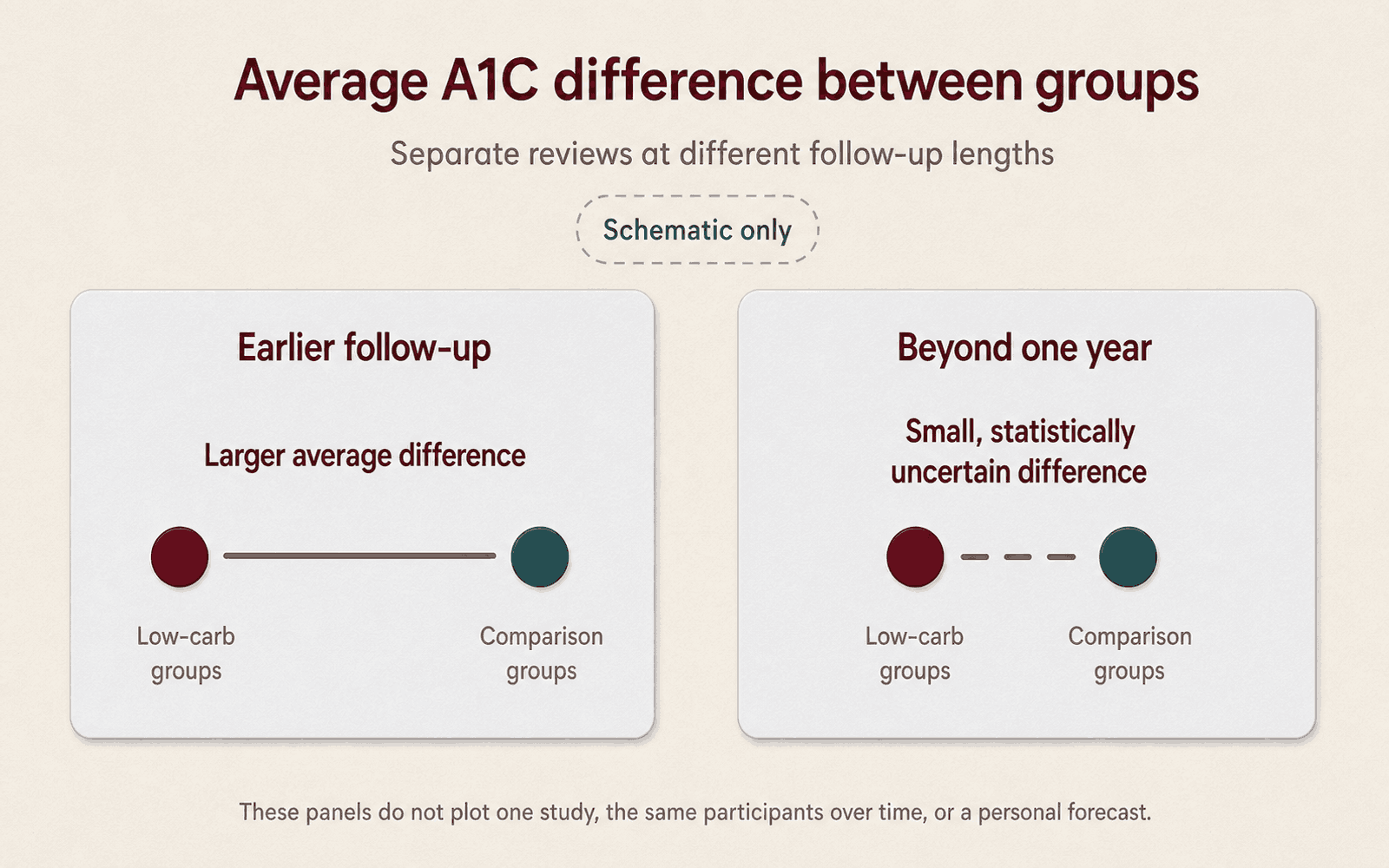
Low-carbohydrate eating often improves blood sugar during the first three to six months of a study. By a year or longer, the average difference between the low-carb group and the comparison group is usually smaller.
What changed in between?
The final number carries more than a verdict on carbohydrates. It reflects what people were eating by then, which foods replaced the carbohydrates, changes in weight and medication, the care each group received, and how a study defined “low-carb” in the first place.
That fuller view matters if you are deciding whether a lower-carbohydrate pattern belongs in your own care. The early benefit is credible. The long-term result is more varied. Safety, food quality, and the shape of an ordinary week all belong in the decision.
The early change is the clearest signal
A1C, also written HbA1c, estimates average blood sugar over roughly the previous three months. That timing makes a three- or six-month diet trial long enough to show a change in the average.
In a 2021 review of 23 randomized trials, adults assigned to low-carbohydrate diets were more likely to reach a remission-level A1C at six months than adults in mostly low-fat comparison groups. The apparent advantage became smaller when remission also required stopping glucose-lowering medication. The authors rated much of the evidence from moderate to low certainty because diets, comparison groups, and remission definitions varied.
Remission also has a stricter clinical meaning than reaching one laboratory threshold. A 2021 international consensus defines type 2 diabetes remission as an A1C below 6.5% for at least three months after glucose-lowering medicine has been stopped. Ongoing follow-up remains part of care because glucose can rise again. The six-month review provides evidence for an early response while leaving permanence unanswered.
A newer review of 27 randomized trials estimated an average A1C difference of 0.29 percentage points in favor of low-carb eating, with the largest effect at three months and smaller effects later. That estimate describes the group. A personal forecast also depends on starting A1C, medicines, weight change, food choices, and daily glucose patterns.
The biological reason for this early shift is straightforward: carbohydrates directly drive post-meal glucose spikes, so cutting them leads to immediate blood sugar changes. However, factors like total calorie intake, weight loss, fiber quality, and medication adjustments all move that same A1C number. A1C alone leaves that contributing mix unresolved.
A one-year average contains several stories
A 2024 review of six randomized trials lasting longer than one year found a small, statistically uncertain difference in A1C between low-carbohydrate and comparison diets. Triglycerides and HDL cholesterol favored the low-carbohydrate groups.
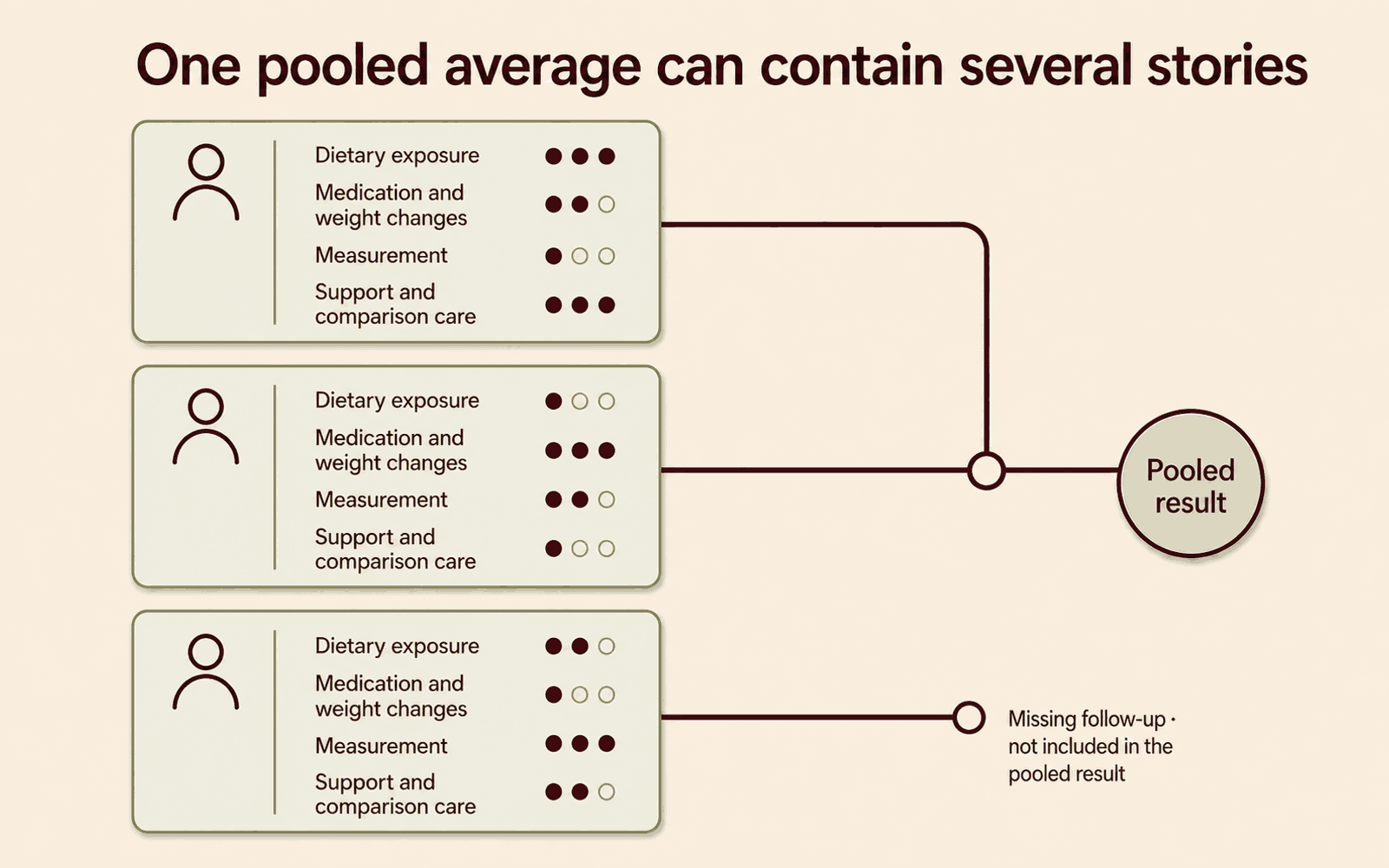
Some participants reported eating more carbohydrate than their assigned target as the months passed. The comparison groups were changing too, often with nutrition counseling of their own. Medication doses shifted. Weight changed. People left studies, and food records depended on memory.
Those moving parts make reduced exposure to the assigned diet a plausible part of the explanation. They also keep it from being the whole explanation.
The long-term randomized result still matters. It tests the package of advice and support as assigned, complete with the friction and changes that accumulate in daily practice. Missing follow-up limits how fully the endpoint represents the original group.
A separate biological question asks what would happen if two diets stayed sharply different while weight, medicines, food quality, and support remained stable. Free-living trials rarely hold all of those conditions steady for years.
One two-year trial adds another layer. In the Tay study, 115 adults were assigned to energy-matched plans targeting 14% or 53% of energy from carbohydrate. Among 61 participants who completed two years, weight and A1C improved by similar amounts. The lower-carbohydrate group used less diabetes medication and had steadier glucose readings.
Substantial dropout and intensive support limit how much that one study can settle. It does show how two people or two groups can reach a similar A1C through different routes. Medication burden, glucose variability, lipid response, symptoms, and day-to-day feasibility may add information that A1C leaves out.
“Low-carb” describes a range
The Goldenberg review defined “low-carbohydrate” as below 130 grams per day or below 26% of energy. Other trials set different boundaries. The ADA’s 2026 guidance describes very-low-carb plans as often aiming for 20 to 50 grams per day. In the 2025 review, none of the intervention groups sustained an average intake below 10% of energy.
The foods inside those numbers vary just as much.
One person may lower carbohydrate by replacing sweetened drinks, changing a breakfast, or reducing a refined-grain portion while keeping beans, fruit, and whole grains. Another may remove most of those foods. The replacement might be nuts, fish, olive oil, and vegetables, or it might be foods high in saturated fat and low in fiber. The same label can describe diets with different effects on cholesterol, digestion, nutrient intake, cost, culture, and family meals.
The small Keto-Med randomized crossover trial illustrates this. Both the ketogenic and Mediterranean-plus phases avoided added sugars and refined grains and emphasized nonstarchy vegetables. A1C was similar between the two phases. Triglycerides fell more during the ketogenic phase, while LDL cholesterol was higher and fiber plus several nutrients were lower. Participants later reported the Mediterranean-plus pattern as easier to continue.
The trial lasted 12 weeks per phase and included only 40 adults, with 33 in the complete primary analysis. Its value is in showing the replacement question clearly: carbohydrate quantity is one feature of a meal, and food quality travels with it.

The ordinary week changes the plan
Clinical studies often talk about “adherence”, essentially measuring how closely someone follows a prescribed diet. But in daily life, following a plan isn’t just about willpower; it’s shaped by real-world demands like work schedules, family budgets, and food availability. The word can sound like a score of effort.
A night-shift schedule changes when food is available. A household may share one pot of rice, pasta, beans, or stew. Grocery prices, dental problems, digestive symptoms, religious observance, appetite, cooking equipment, and time between jobs can all change the menu. Someone managing insulin also has to coordinate food changes with dosing and glucose monitoring. These conditions become active parts of the intervention.
Support changes the experience too. Many trials include repeated visits, meal-planning help, goal review, and encouragement that routine care may struggle to provide. Working with a Diabetes Care and Education Specialist (DCES) or Registered Dietitian (RDN) can bridge the gap between clinical advice and daily reality. A DCES can help adapt a lower-carb pattern to your routine, evaluate glucose trends from a CGM or meter, preserve culturally important foods, and coordinate regimen adjustments directly with your prescribing team.
What would the plan look like on the hardest routine day of the week?
That question tends to reveal more than a perfect sample menu. It may lead to a smaller change at breakfast, a different drink during a shift, a reliable freezer meal, or a more flexible target for family dinners. The review can then examine the clinical response and the work required to produce it.
Put the medication plan first
Blood sugar can change within days of a substantial carbohydrate reduction. The ADA’s 2026 nutrition guidance calls for medical oversight and medication adjustment around very-low- carbohydrate eating. For someone using insulin or a sulfonylurea, the previous dose may then produce hypoglycemia. Arrange a medication-adjustment and glucose-monitoring plan with the prescribing team before making that change. Continue insulin according to the clinical plan, because too little insulin can lead to severe hyperglycemia or ketoacidosis.
SGLT2 inhibitors need a separate warning. This class includes medicines such as empagliflozin, dapagliflozin, and canagliflozin. Ketogenic eating, markedly reduced calorie intake, illness, dehydration, surgery, and too little insulin can raise ketoacidosis risk. The ADA advises avoiding very-low-carbohydrate eating while using an SGLT2 inhibitor. Contact the prescribing team before starting a ketogenic or very-low-carb plan. Current FDA labeling notes that ketoacidosis can occur with glucose below the level many people expect.
Nausea, vomiting, abdominal pain, unusual exhaustion, or shortness of breath call for urgent medical evaluation under the person’s sick-day or emergency plan.
The same guidance places very-low-carbohydrate eating outside its routine recommendations for children, pregnancy or lactation, kidney disease, and people with or at risk for disordered eating. Those recommendations address very-low-carbohydrate eating specifically. A modest reduction in carbohydrate is a different intervention, and personal medical circumstances still shape its safety.

Build a version you can review
A practical trial begins with a specific reason. You may care about post-meal glucose, A1C, triglycerides, medication burden, hunger, cost, or making meals less complicated. Choosing the outcome helps you decide what to observe.
Then make the food change visible. Which meal or drink will change? What will take its place? How will the new version work during a shift, a rushed morning, a restaurant meal, or dinner with other people?
Keep the record small enough to use. Depending on the clinical plan, it might include glucose readings, low-glucose episodes, medication doses, hunger, energy, digestive symptoms, or the groceries that became hard to find or afford. Set a review date with the care team or RDN when medication or medical risk is involved.
At that review, the options stay open. Continue the pattern, loosen the restriction, improve the food mix, add support, or choose another approach. Berine’s six-pillar framework can help keep sleep, movement, stress, treatment, and body signals visible while leaving room for several explanations.
Low-carb eating can be a useful option for type 2 diabetes. Its value shows up in the laboratory result and in the meals a person can keep making through an ordinary week. Bring both kinds of information to the next review: the numbers and the lived experience around them.
Selected sources and further reading
- ADA Standards of Care 2026: nutrition and eating patterns
- Goldenberg and colleagues: low-carb diets and type 2 diabetes remission
- International consensus: definition and interpretation of type 2 diabetes remission
- Ichikawa and colleagues: trials lasting longer than 12 months
- Mongkolsucharitkul and colleagues: 27-trial meta-analysis
- Tay and colleagues: two-year randomized trial
- Gardner and colleagues: Keto-Med randomized crossover trial
- NIDDK: the A1C test
- FDA: current dapagliflozin-containing product labeling and ketoacidosis precautions
This information is for educational purposes. Discuss changes to your diabetes management with your care team.